REUS
Oficina de Turisme / Tourist Office
Plaça del Mercadal, 3
Tel. 977 010 670
http://www.reuspromocio.cat/
infoturisme@reus.cat
Located in the heart of the Costa Dorada, Reus tourism is recognized as a shopping city, as well as its modernist heritage and its close links with the universal architect Antoni Gaudí.

Gaudí child sculpture
Near the architect’s house, at the junction of Santa Anna and Amargura streets, is the work Gaudí nen by the sculptor Artur Aldomà from Reus, from 2002.
A 1.10-meter bronze sculpture that represents the architect playing marbles during his childhood. The golden marbles have a rotating effect and allow the viewer to discover the name of the genius by spinning them.
Location: Bitterness Street (C/Amargura)
https://maps.app.goo.gl/5uPDfpRw1a7CjgCw5
Gaudi Center
https://www.reusturisme.cat/ciutat-de-gaudi/gaudi-centre/
This modern interpretation center is an experience for the senses and the mind.
The visit will allow you to get to know Gaudí better and discover the secrets of the genius.
Hometown Gaudi Reus also preserves the most emblematic places of the childhood and youth of the architect, you can make walking the route Gaudí, as well as a modern interpretation center dedicated to the life and work of genius, the Gaudí Center.


Located in the heart of the city, the Gaudí Centre Reus is the only interpretation centre on the life and work of the architect. The Gaudí Centre Reus is the tribute that Gaudí’s hometown dedicates to its most universal son. Equipped with the most modern infrastructures and the latest audiovisual technology, the Gaudí Centre Reus opens the senses and minds of its visitors to new experiences. It is a reference cultural facility where you can interactively understand the keys to Gaudí’s and modernist architecture in general.
The interpretation centre is located in Plaça del Mercadal, in the heart of the city’s historic and commercial centre, the yolk of the egg of the city’s vibrant and characteristic street life. The modern Gaudí Centre building houses, in addition to the 1,200 m2 exhibition space, the Tourist Office, the shop and the restaurant.
Location: Plaza del Mercadal, 3,
https://maps.app.goo.gl/u4WRFVMMsZBvU5mMA
In medieval and almost a thousand years of history, the city had its moment of splendor from the eighteenth century, thanks to the export of liquor that was produced in the city. In the late nineteenth and early twentieth centuries were built in Reus great Modernist buildings, becoming, after Barcelona, the most important modernist city of Catalonia. Currently, the city has one of the sets of Modernist buildings most important in Europe, you can discover the Modernist Route, an itinerary that 26 buildings of this style highlights of the city, among them especially the works of the great architect Lluis Domenech i Montaner, who built Reus Pere Mata Institute, Casa Navàs, Casa Rull and Casa Gasull.
Discover the Route of Modernism
https://www.reusturisme.cat/que-fer/descobriu-la-ruta-del-modernisme
One of the main attractions of Reus is its modernist heritage that transformed its urban landscape in the early 1900s.
The Modernisme Route is a signposted route through the city centre that includes 29 of the almost 80 buildings that form part of the catalogue of Reus’ modernist architecture. It can be followed completely freely and free of charge based on the itinerary marked on the tourist map published by Reus Promoció and which will help you locate each of the buildings that make up the route. As the central streets are flat, most of the route can be reached on foot and is accessible to people with reduced mobility.
As you follow the marked route, you will easily identify the buildings that are part of the Modernisme Route, as they all have a distinctive golden plaque on the ground, right in front of the facade of each one. In addition to being able to admire the exterior of the building, the plaque will give you information about the name of the house, the architect and the year of construction.
The route will show you some of the most spectacular modernist gems of the city. Presiding over the Plaça del Mercadal you will find the Casa Navàs, a building unique in Europe because it preserves all of its original interior. The work of the prestigious architect Lluís Domènech i Montaner, the best craftsmen of the time collaborated in the design and construction of this building.


Casa Navas
Plaza del Mercadal, 7, Reus
https://maps.app.goo.gl/3dwEJ2MSxDWatYt79
https://casanavas.cat/en/guided-visit/
Domènech i Montaner also designed the Rull and Gasull houses, located side by side on Carrer Sant Joan, one built higher than the other due to a rumored rivalry between the families. The architect also designed the Institut Pere Mata, the psychiatric hospital located on the outskirts of the city and the crown jewel of Reus’ modernist heritage.
While walking the Modernisme Route you can also enjoy the works of local architects, such as Pere Caselles, who as municipal architect left an immense legacy in Reus. In addition to designing several houses selected on the route for the wealthy families of the time, such as Munné, Punyed and Sagarra, he also led important public building projects such as the Prat de la Riba School, the Winery Station or the old slaughterhouse, today the Xavier Amorós Municipal Library.
In addition, the route points out outstanding works by other modernist architects such as Casa Marco, the work of Pere Domènech i Roura, son of Domènech i Montaner. Another outstanding architect is Joan Rubió, also from Reus, a disciple of his compatriot Antoni Gaudí and author of the Casa and Xalet Serra.
Walking through the streets and squares of Reus is like opening a window into the splendid life of the early 20th century, when the economic boom meant that architects such as Lluís Domènech i Montaner and Pere Caselles left an important mark. Discover it with the Modernisme Route!
Currently, the entrepreneurial spirit that has always characterized the city is reflected in the commercial dynamism of the historical center, diversified and high quality, and the intense cultural life and festive, with a varied program taking place throughout the year.
MORE INFORMATION
Oficina de Turisme / Tourist Office
Plaça del Mercadal, 3 – Tel. 977 010 670
http://www.reuspromocio.cat/ – infoturisme@reus.cat
TARRAGONA
Patronat Municipal de Turisme de Tarragona / Tarragona Municipal Tourism Board
C/ Major, 39. 43003 Tarragona
Tel.: +34 977 250 795
turisme@tarragona.cat
https://www.tarragonaturisme.cat/en
A city full of surprises
A city full of surprises with thousands of years of civilization just waiting to be discovered. Dine under the vaults of the Roman circus, lose yourself in the charming, narrow alleys of the historic quarter, where the essence of the medieval city remains untouched by time, or enjoy a glass of local vermouth surrounded by over 2,000 years of history. This is the true World Heritage of Tarragona! It is a heritage made up of monuments that transcend time, of spots that take us back to Roman, medieval, modern and modernist eras; but it is also a heritage made of people, of human stories and histories, of small moments, of emotions and feelings…
10 essential visits in Tarragona
Don’t miss it! Discover the cultural richness and natural environment of this World Heritage City.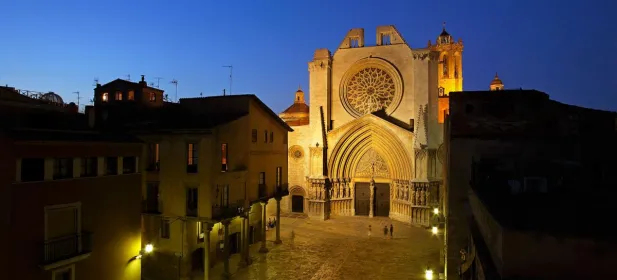
Cathedral
(12th-14th century), built in the highest point of the capital, in the same site where there was once a temple dedicated to the imperial cult.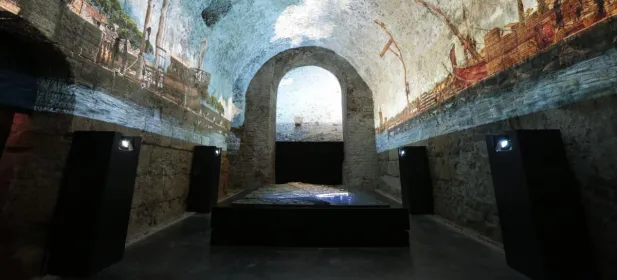
Mapping of Tarraco
Mapping and scale model of the Roman city of Tarraco at its peak (2nd century A.D.).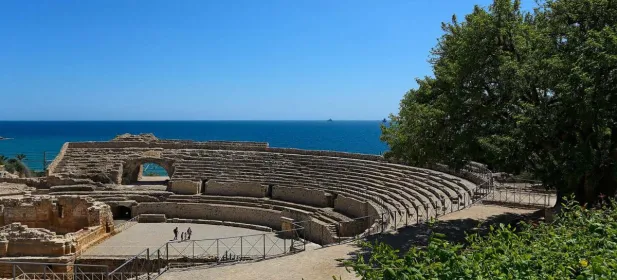
Roman Amphitheatre
Building that held fights between gladiators (2nd century), over which the Visigoth basilica was built (6th century) as well as a Romanesque church (12th century).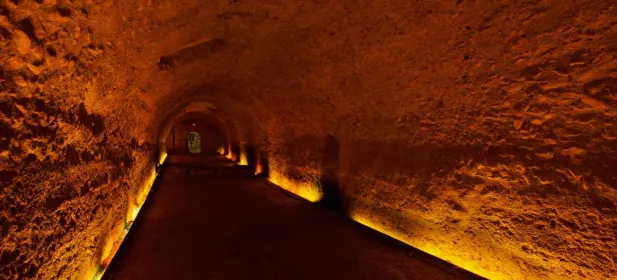
Praetorium and Roman Circus
Roman tower at the Provincial Forum square (1st century) transformed into a royal palace (14th century). Roman Circus Building used to hold horse and chariot races (1st century).
Balcó del Mediterrani (‘Balcony of the Mediterranean’)
The most contemporaneous city reveals a unique and remarkable corner inspired, once more, in the marine aesthetics that covers the city, the “balcony to the Mediterranean” a splendid viewpoint open to the sea over the beach.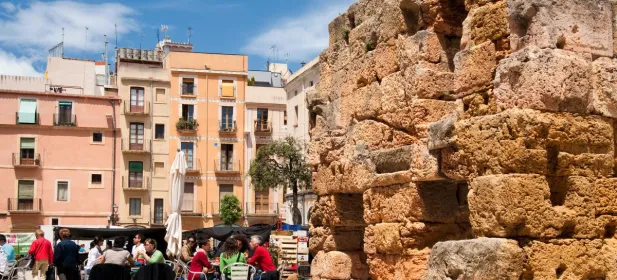
Plaça de la Font, Plaça del Fòrum, Plaça del Rei
The modern city coexists with its imperial past, enjoy its terraces full of life in a unique environment and surrounded by history.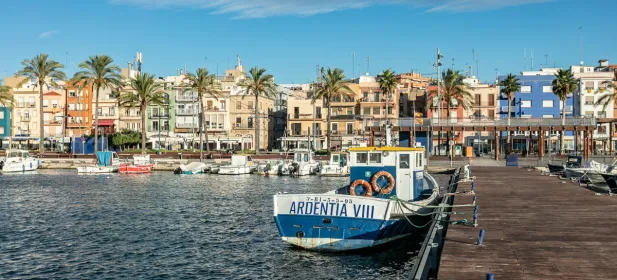
El Serrallo
The typical fishing neighbourhood, where the fish that was fished throughout the day is auctioned in the afternoon. It is a representative area, with its own personality where to taste the best fish and seafood of Tarragona in its charming restaurants.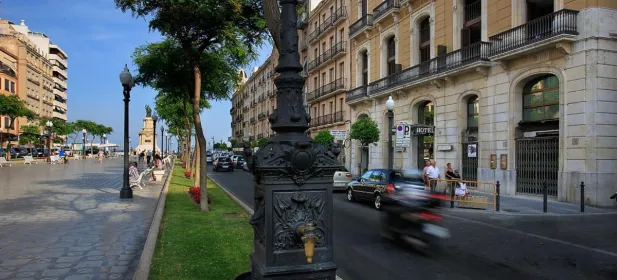
La Rambla Nova
Main street of Tarragona with over 150 years of existence, with the greatest number of modern shops, integrated in an architectural area unique for its buildings and history.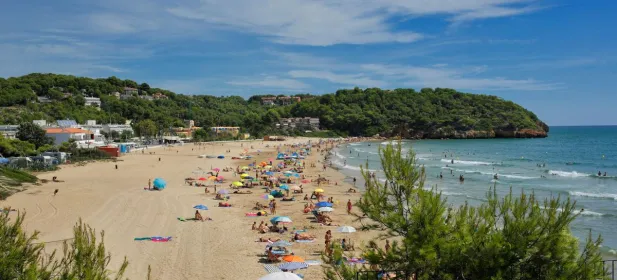
Tarragona’s beaches
Are renowned for their extremely fine, golden sand, with a very mild slope which allows walking in the water or swimming as from 200 m from the beach line. Its privileged geographic location allows enjoying a mild climate throughout the year.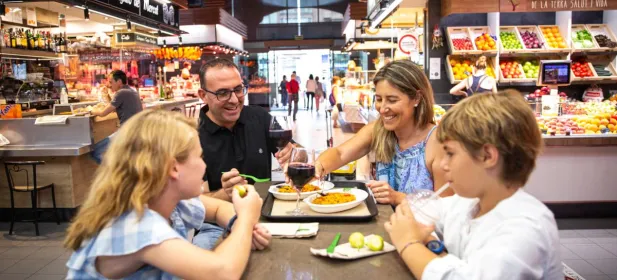
Mercat Central de Tarragona (Central Market of Tarragona)
If you are looking to buy fresh and seasonal products in a picturesque setting, be sure to visit Tarragona’s municipal markets. The main market, Mercat Central, located just off Rambla Nova, is housed in a hallmark Modernist building (Josep M. Pujol, 1915).
MORE INFORMATION
Patronat Municipal de Turisme de Tarragona / Tarragona Municipal Tourism Board
C/ Major, 39. 43003 Tarragona – Tel.: +34 977 250 795
turisme@tarragona.cat / https://www.tarragonaturisme.cat/